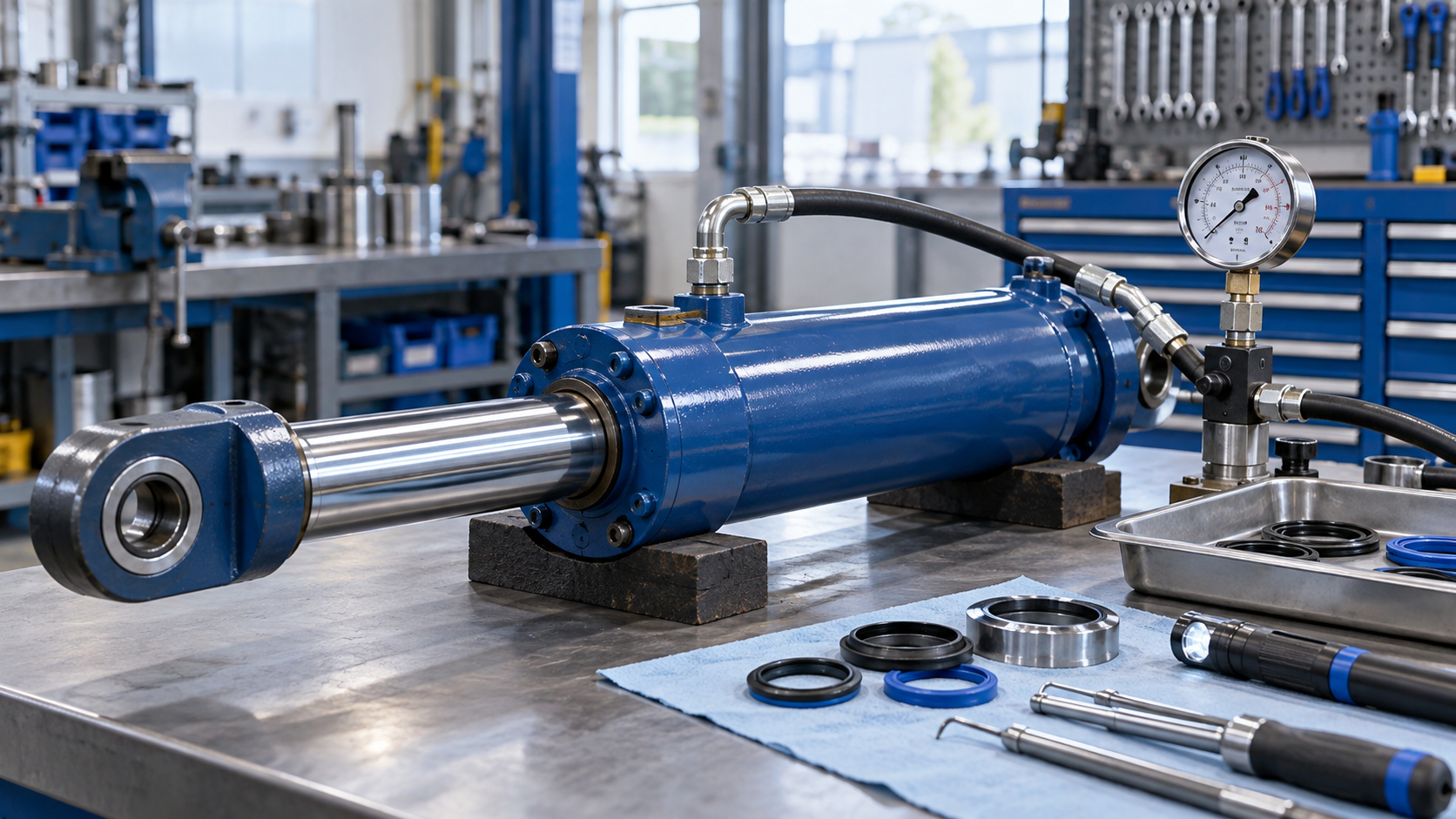
<img src="learn-common-hydraulic-cylinder-drift-causes.jpg" alt="Learn common hydraulic cylinder drift causes, including internal leakage and seal failure, with a clear step-by-step guide for faster troubleshooting.">
<h2>Learn Common Hydraulic Cylinder Drift Causes – Including Internal Leakage & Seal Failure – With a Clear Step-by-Step Guide for Faster Troubleshooting</h2>
<p>If you work with hydraulic machinery, you’ve probably dealt with <strong>hydraulic cylinder drift</strong> at some point. It’s that frustrating problem where a cylinder slowly creeps or moves on its own, even when it’s supposed to hold a position.</p>
<p>Not only is drift annoying, but it can also lead to <strong>lost productivity</strong>, <strong>safety risks</strong>, and <strong>costly downtime</strong> if you don’t fix it quickly.</p>
<p>But what causes hydraulic cylinder drift, and how do you figure out the root cause without wasting hours?</p>
<p>In this guide, we’ll break down the <strong>most common causes of hydraulic cylinder drift</strong> — including internal leakage and seal failure — and give you a <strong>simple step-by-step troubleshooting process</strong> to diagnose and fix the problem fast.</p>
<h3>What Is Hydraulic Cylinder Drift?</h3>
<p>First, let’s make sure we’re on the same page.</p>
<p><strong>Hydraulic cylinder drift</strong> is when a cylinder <em>slowly moves or changes position</em> without any input from the operator. This happens when hydraulic fluid <strong>leaks past</strong> the piston seals, control valve, or other components — causing pressure to drop and the load to shift.</p>
<p>You might notice it in:</p>
<ul>
<li>Forklift masts that slowly lower on their own</li>
<li>Excavator arms that drift when idle</li>
<li>Presses that don’t hold position</li>
<li>Any hydraulic system that needs to maintain a set position under load</li>
</ul>
<p>In short — if your cylinder isn’t staying where you put it, you’re dealing with drift.</p>
<h3>Common Causes of Hydraulic Cylinder Drift</h3>
<p>There are several reasons a hydraulic cylinder might drift. Let’s look at the most common ones:</p>
<h4>1. Internal Leakage (Most Common Cause)</h4>
<p><strong>Internal leakage</strong> is the <em>number one cause</em> of hydraulic cylinder drift.</p>
<p>Inside a cylinder, the piston has <strong>seals</strong> that separate the two sides of the cylinder (the cap end and the rod end). When these seals wear out or get damaged, fluid can <strong>leak from one side to the other</strong> — even when the valve is closed.</p>
<p>This allows the cylinder to move slowly under load, creating drift.</p>
<p><strong>Signs of internal leakage:</strong></p>
<ul>
<li>Slow drift, especially under heavy loads</li>
<li>No visible external leaks</li>
<li>Increased cycle times</li>
<li>Higher operating temperatures</li>
</ul>
<h4>2. Seal Failure</h4>
<p>Closely related to internal leakage, <strong>seal failure</strong> is a major contributor to drift.</p>
<p>Cylinder seals can fail for many reasons:</p>
<ul>
<li><strong>Normal wear and tear</strong> — Seals degrade over time, especially in high-cycle applications.</li>
<li><strong>Contamination</strong> — Dirt, metal particles, or water in the fluid can scratch or damage seals.</li>
<li><strong>Improper installation</strong> — If seals are twisted, pinched, or installed backwards, they’ll fail quickly.</li>
<li><strong>Extreme temperatures</strong> — Very hot or cold conditions can make seals brittle or soft, causing them to fail.</li>
<li><strong>Pressure spikes</strong> — Sudden pressure surges can blow out seals or damage them permanently.</li>
</ul>
<p>When seals fail, fluid leaks past the piston — and drift follows.</p>
<h4>3. External Leaks</h4>
<p>While internal leakage is the most common cause of drift, <strong>external leaks</strong> can also be a culprit.</p>
<p>If fluid is leaking out of the cylinder around the <strong>rod seal</strong>, <strong>gland fittings</strong>, or <strong>port connections</strong>, the system loses pressure. Over time, this pressure loss causes the cylinder to drift.</p>
<p><strong>How to spot it:</strong> Look for visible oil drips, wet spots, or puddles around the cylinder or hydraulic lines.</p>
<h4>4. Control Valve Problems</h4>
<p>Sometimes the problem isn’t the cylinder at all — it’s the <strong>control valve</strong>.</p>
<p>Directional control valves are supposed to hold the cylinder in place when they’re in the neutral position. But if the valve has <strong>worn spools</strong>, <strong>damaged seats</strong>, or <strong>internal leakage</strong>, fluid can bypass the valve and cause the cylinder to move.</p>
<p>Valve-related drift is often mistaken for cylinder drift, so it’s important to <strong>test both</strong> during troubleshooting.</p>
<h4>5. Load Check Valve or Counterbalance Valve Issues</h4>
<p>Many hydraulic systems use <strong>load holding valves</strong> (like counterbalance valves or pilot-operated check valves) to prevent drift, especially on vertical or load-bearing cylinders.</p>
<p>If these valves are:</p>
<ul>
<li>Maladjusted</li>
<li>Contaminated</li>
<li>Worn out</li>
<li>Not sized correctly for the load</li>
</ul>
<p>They won’t hold pressure properly — and the cylinder will drift.</p>
<h4>6. Air in the Hydraulic System</h4>
<p>Air is compressible — hydraulic fluid is not.</p>
<p>If there’s <strong>air trapped in the cylinder or hydraulic lines</strong>, it can compress under load, causing the cylinder to move or drift erratically. Air can also cause spongy operation and reduced system efficiency.</p>
<p>Air usually gets into the system through <strong>low fluid levels</strong>, <strong>leaks on the suction side of the pump</strong>, or <strong>improper maintenance</strong>.</p>
<h4>7. Worn or Damaged Cylinder Components</h4>
<p>Beyond seals, other cylinder parts can wear out and cause drift:</p>
<ul>
<li><strong>Scored or scratched cylinder barrel</strong> — If the inside of the barrel is damaged, seals can’t create a proper seal, leading to leakage and drift.</li>
<li><strong>Bent piston rod</strong> — A bent rod can cause uneven seal wear and misalignment, leading to leaks.</li>
<li><strong>Worn piston</strong> — A worn piston can allow fluid to bypass, even if the seals are new.</li>
</ul>
<h3>Step-by-Step Hydraulic Cylinder Drift Troubleshooting Guide</h3>
<p>Now that you know the common causes, here’s a <strong>simple, step-by-step process</strong> to figure out why your cylinder is drifting:</p>
<h4>Step 1: Safety First</h4>
<p>Before you start troubleshooting:</p>
<ul>
<li><strong>Turn off the machine</strong> and relieve pressure from the hydraulic system.</li>
<li><strong>Lock out / tag out</strong> the equipment if needed.</li>
<li>Make sure the cylinder is in a <strong>safe position</strong> (lower any loads or use mechanical supports).</li>
<li>Wear proper <strong>safety gear</strong> — gloves, goggles, etc.</li>
</ul>
<p>Hydraulic systems can hold pressure even when turned off, so always be careful.</p>
<h4>Step 2: Visual Inspection</h4>
<p>Start with the basics:</p>
<ul>
<li>Check for <strong>external leaks</strong> — Look around the rod seal, gland, ports, and hydraulic lines for oil drips or wet spots.</li>
<li>Check the <strong>hydraulic fluid level</strong> — Low fluid can cause air to enter the system, leading to drift.</li>
<li>Inspect the <strong>piston rod</strong> — Look for dents, scratches, rust, or bending. A damaged rod c
L-imħaraq iċ-ċilindru idrawliku jseħħ meta ċilindru jimċeletki minkejja li l-valvola ta' kontroll hija f'pożizioni newtrali. Pereżempju, lift jista' jonqos bil-mod, jew pressa tista' titlef il-forza taħt t-tagħbija.
Fit-tagħmir B2B, dan jista' jikkawża nuqqas ta' ħin tax-xogħol, riskji għas-sikurezza, u preċiżjoni ħażina tal-produzzjoni. Għalhekk, li ssib il-kawża vera malajr huwa importanti. Din il-gwida tispjega l-kawżi ewlenin tal-imħaraq iċ-ċilindru idrawliku u kif tiċċekkjahom pass pass.
X'inhu l-Imħaraq iċ-Ċilindru Idrawliku?
L-imħaraq iċ-ċilindru idrawliku ifisser li l-virgola tal-piston timxi mingħajr kmand. Fil-biċċa l-kbira tal-każijiet, iż-żejt inqabeż minn siġill, valvola, jew parti oħra tas-sistema idrawlika.
Il-problema tista' tiġi miċ-ċilindru innifsu. Madankollu, tista' tiġi wkoll mill-valvola ta' kontroll, valvola ta' żamma tat-tagħbija, kundizzjoni taż-żejt, jew disinn tas-sistema.
Kawżi Ewlenin tal-Imħaraq iċ-Ċilindru Idrawliku
Kawżi komuni jinkludu:
- Problemi ta' tnixxija interna taċ-ċilindru idrawliku
- Falliment tas-siġill tal-piston
- Tlibsa tas-siġill tal-virgola
- Barril taċ-ċilindru imħaxtek
- Piston bil-ħsara
- Valvola ta' kontroll difettuża
- Valvola ta' kontra-bilancju li tnixxi
- Żejt msaħħeb jew isħon żejt
- Viskosità ħażina taż-żejt
- Tagħbija żedda minn naħa
Minħabba li ħafna difetti jidhru simili, proċess ta' test ċar jgħin biex jevita tiswijiet ħżiena.
Pass 1: Ikkonferma l-Imħaraq
L-ewwel, poġġi l-magna f'pożizione ta' test sigura. Imbagħad żomm iċ-ċilindru taħt tagħbija normali u ssettja l-valvola f'newtrali.
Sussegwentement,kejl kemm tirrohta l-virgola maż-żmien. Irrekordja wkoll il-pressjoni, temperatura taż-żejt, u piż tat-tagħbija.
Jekk iċ-ċilindru jimħareqx biss taħt tagħbija, tnixxija interna jew tnixxija tal-valvola huma aktar probabbli.
Pass 2: Iċċekkja Tnixxijiet Esterni
Ispettja ż-żona tas-siġill tal-virgola, portijiet, kawżi, u aċċessorji. Jekk iż-żejt jidher madwar il-virgola, is-siġill tal-virgola jista' jkun mitlub. Jekk iż-żejt jidher ħdejn il-portijiet, aċċessorju jew kawża jista' jkun bil-ħsara.
Madankollu, n-nuqqas ta' żejt viżibbli ma jfissirx li ċ-ċilindru huwa tajjeb. Ħafna kwistjonijiet ta' imħaraq iseħħu ġewwa ċ-ċilindru.
Pass 3: Ittestja għal Tnixxija Interna
Il-kwestjonijiet ta' tnixxija interna taċ-ċilindru idrawliku huma kawża komuni tal-imħaraq. Dan jseħħ meta ż-żejt jgħaddi mal-piston minn naħa għall-oħra.
Dan ħafna drabi jikkawżat minn siġilli tal-piston mitluba, ċrieki ta' wear bil-ħsara, jew ħrieġ ġewwa l-barril.
Jekk il-pressjoni tonqos waqt li ċ-ċilindru għandu joqgħod, tnixxija interna tista' tkun il-kawża. Dejjem segwi proċeduri ta' test siguri qabel ma tiskoneċċja linji jew timblokka portijiet.
Pass 4: Ispettja għal Falliment tas-Siġill
Il-falliment tas-siġill huwa waħda mir-raġunijiet l-aktar komuni għall-imħaraq. Is-siġilli tal-piston iridu jżommu l-pressjoni separata ġewwa ċ-ċilindru. Meta jintlibsu, jinqatgħu, jibdew iebsin, jew jiddeformaw, iż-żejt jista' jgħaddi bil-piston.
Sinjali ta' falliment tas-siġill jinkludu:
- Moviment bil-mod taħt tagħbija
- Telf ta' forza ta' żamma
- Moviment mhux uniformi
- Akumulazzjoni ta' sħana
- Preċiżjoni tal-magna mnaqqsa
Jekk is-siġilli huma bil-ħsara, ibdilhom. Iċċekkja wkoll il-barril u l-virgola, minħabba li uċuħ mhux maħduma jistgħu jagħmlu ħsara lill-siġilli l-ġodda malajr.
Pass 5: Iċċekkja l-Barril, il-Virgola, u l-Piston
Fittex ħrieġ, sadid, toqob, qoxra ta' kromu li tqatta', jew virgola mgħawġa. Ispettja wkoll il-piston u ċ-ċrieki ta' gwida.
Barril imħaxtek jista' jaqta' s-siġilli. Virgola mgħawġa tista' toħloq tagħbija minn naħa. Piston maħlul jew bil-ħsara jista' wkoll jikkawża li ż-żejt jgħaddi.
Jekk il-ħsara hija serja, kit ta' siġilli ma jkunx biżżejjed. Iċ-ċilindru jista' jeħtieġ tiswija jew sostituzzjoni.
Pass 6: Iċċekkja l-Valvola ta' Kontroll
Lista ta' Verifika għall-Manutenzjoni Preventiva tal-Ċilindri Idrawliċi għal Sitijiet Industrijali Durbieħ
Taħsib tal-Ħajja tal-Kilindru tal-Press Idrawliku: Forza, Velocità, Allinjament tal-Qafas u Montar


